An overview for property owners, investors, tenants and estate managers in the Nigerian market.
Few topics generate as much friction in Lagos estates as money collected for shared services. The disputes are rarely about the amount alone. They are about trust: what the money is for, who decides, and whether anyone can see where it went. Understanding the two main charge heads is the first step to resolving that.
1. The Terms
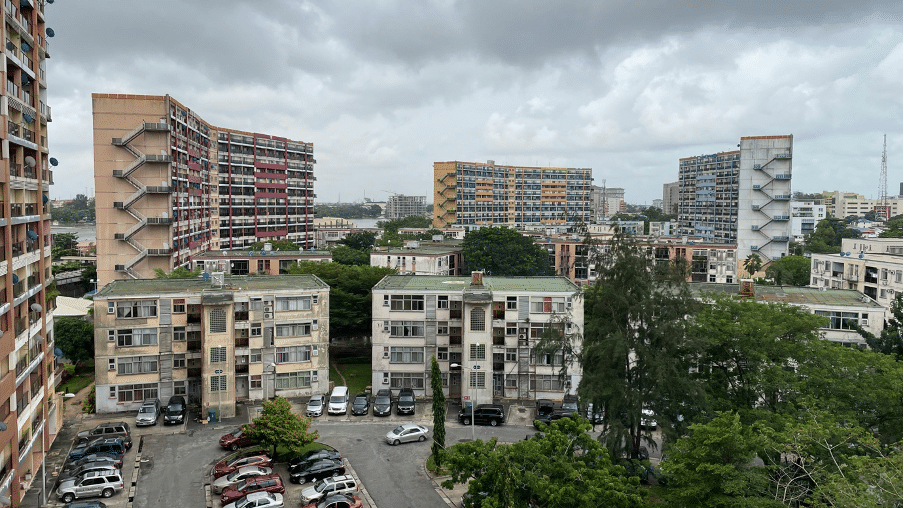
Service charge is the recurring contribution that funds the day-to-day running of shared parts and services: cleaning of the common area, refuse disposal, septic evacuation, drainage clearing, common area fumigation, gardening, water treatment, estate security, elevator repairs and maintenance, administrative fee, It is an operating expense, spent in the period it is collected [5].
Sinking fund (capital fund) is a reserve built up steadily for large, infrequent costs: repainting the buildings, roof and elevator replacement, resurfacing internal roads, or overhauling water and sewage treatment plants. The Lagos State Government has itself described this model for its estates, with periodic contributions funding treatment plants, green areas and scheduled repainting [3].
The simple distinction: service charge keeps the estate running today; the sinking fund pays for the estate to still be worth living in ten years from now.
2. Who Bears the Responsibility?
There is no single national rule. The obligation to pay comes from the governing documents, namely the lease or deed, the estate bylaws and, for tenants, the tenancy agreement. In practice:
- Owners carry the primary liability, particularly for the sinking fund, since it preserves the capital value of their asset.
- Tenants pay service charge only where the tenancy agreement says so, and the agreement should state the amount and what it covers.
- Developers and management companies collect, hold and apply the funds as trustees of the residents’ money in substance, whatever the paperwork calls them.
3. Making the Money Accountable and Transparent
- Written authority. Confirm what the governing document permits before billing or enforcing against a defaulter [5].
- Itemised annual budget. Show each cost line, the unit’s share and the basis of apportionment. Generator costs need a clear method, whether flat, by unit size or by consumption [5].
- Ring-fenced accounts. Service charge funds should sit in an account separate from the manager’s own operating money [5]. The sinking fund deserves its own account too.
- Regular statements. Residents should receive periodic statements showing what is due, what it covers and where it is paid [5]. The draft Lagos Tenancy and Recovery of Premises Bill 2025 would go further, requiring separate receipts for service charges and written accounts every six months (s.12(1)) [2].
- Independent annual audit with a summary shared with all residents, and a residents’ committee able to inspect records.
- Competitive procurement for major works, with at least three quotes and disclosed conflicts of interest.
- A funding and investment policy for the sinking fund: a costed ten-to-fifteen-year replacement schedule, contributions that are reviewed against inflation, and placement in low-risk instruments. This is good practice rather than a statutory requirement.
4. The Regulatory Backdrop
The Lagos State Real Estate Regulatory Authority Law, 2022 created a licensing regime for real estate practitioners, including facility managers and developers [1]. Anyone managing an estate should be registered, and residents are entitled to ask to see that registration.
5. Wider Issues the Market Should Watch
- Urban planning. Private estates often fund infrastructure that the wider city does not deliver. If an estate’s sinking fund is thin, deferred maintenance eventually becomes a drain on neighbourhood values and public services. Planning approvals could reasonably require a management structure and a maintenance funding plan before occupation.
- Inflation. In a high-inflation economy a fixed contribution loses buying power quickly. Reserves need scheduled review.
- Buyer due diligence. Ask for the service charge schedule, recent receipts, audited accounts and the size of the sinking fund before you buy. A low service charge may signal under-funding rather than efficiency.
- Mixed use and short-lets. When units in a residential estate convert to short-let use, the wear on shared facilities changes, and apportionment rules should be revisited.
- Enforcement. Collect through the routes the governing documents authorise, and document every step [5].
Conclusion
Service charge and sinking funds are not merely cost items. They are the mechanism by which Nigerian estates keep their value. Where authority is written down, money is ring-fenced, and residents see regular accounts, disputes shrink and asset values hold. Where they are not, the estate pays for it, usually in court.
References
- Famsville Solicitors, “Analysis of the Lagos State Real Estate Regulatory Authority Law, 2022”, Mondaq. https://www.mondaq.com/nigeria/real-estate/1197052/analysis-of-the-lagos-state-real-estate-regulatory-authority-law-2022
- Olisa Agbakoba Legal, “Review of the Lagos State Tenancy and Recovery of Premises Draft Bill, 2025”, Mondaq, 11 September 2025. https://www.mondaq.com/article/1676662
- Leadership, “Lagos plans maintenance charges, sinking fund to preserve infrastructure”. https://leadership.ng/lagos-plans-maintenance-charges-sinking-fund-to-preserve-infrastructure
- Africa Housing News, “Estate Service Charge: Court Rejects N100m Damages Demanded by Homeowners in Lagos”. https://www.africahousingnews.com/homeowners-court-rejects-n100m-damages
- Ownkey, “How to Manage a Gated Estate in Nigeria 2026” (a commercial industry blog; treat as practice guidance, not legal authority). https://ownkey.com/ng/blog/how-to-manage-gated-estate-nigeria
